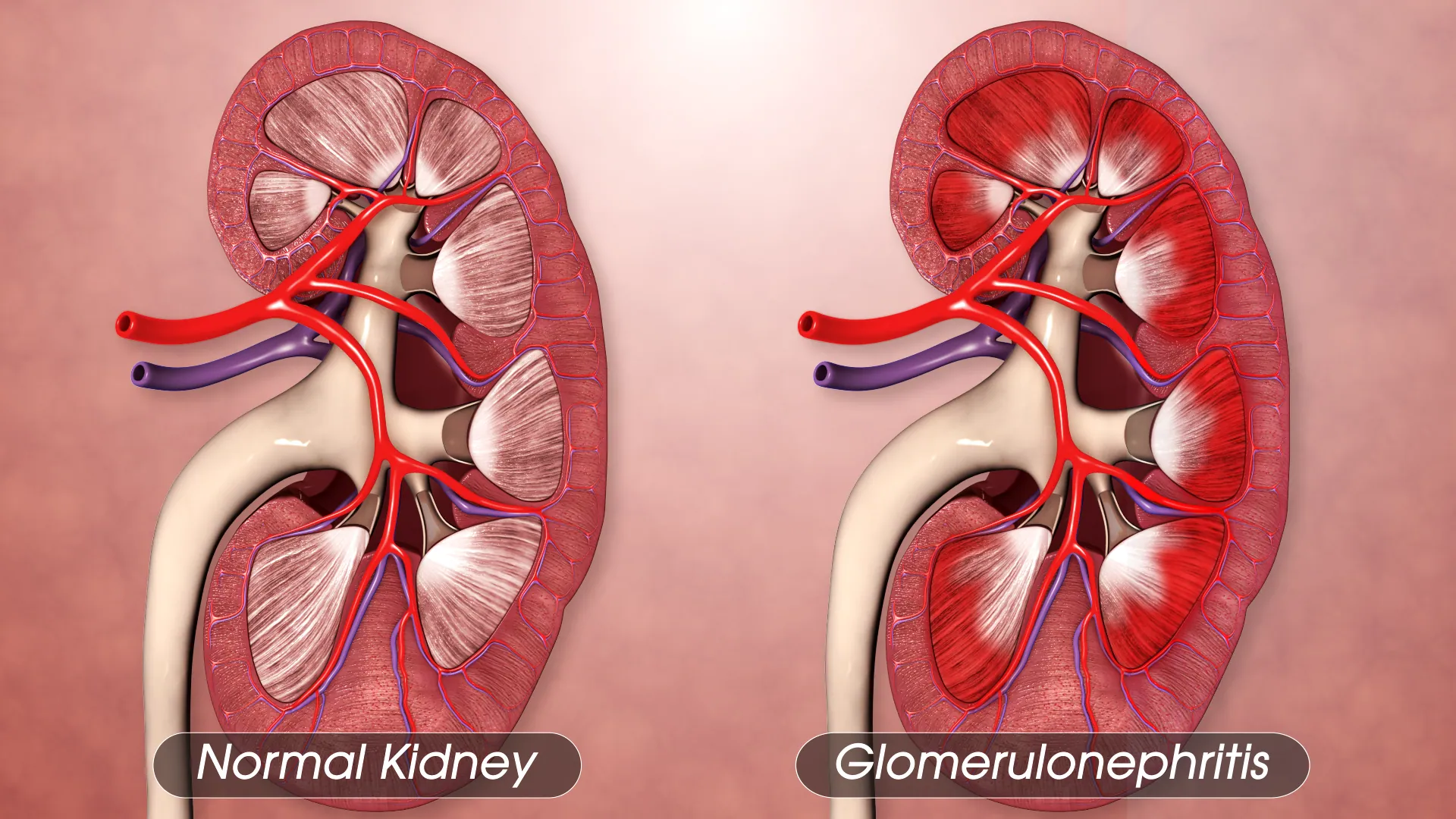
Introduction to Glomerulonephritis
The kidneys contain many coils of tiny blood vessels .Each of these is called glomerulus.Glomeruli filter substances from the blood into the urine.
Glomerulonephritis is an inflammation of these coils(glomeruli).This influences the normal function of the kidney to filter the blood.Glomerulonephritis is relatively uncommon in childhood.It is most common among boys between 3 and 7 but it can occur at any age.
Types of Glomerulonephritis
There are two types of glomerulonephritis
1.Acute glomerulonephritis: It occurs suddenly
2.Chronic glomerulonephritis: It develops gradually over a long period of
Causes of Glomerulonephritis
What causes glomerulonephritis?
1.Streptococcal infection(strep throat, upper respiratory infection.In children it is the most common cause.Glomerulonephritis occurs more than one week after an infection.
2.Systemic autoimmune disease(e.g. systemic lupus erythematosus) .In these diseases the body’s immune system attacks mistakenly healthy cells. Systemic means many parts of the body are affected.
3.Polyarteritis nodosa: This is an inflammatory disease of the arteries.
4.Gramulomatosis with polyangitis: This is a progressive disease that leads to widespread inflammation of all of the body’s organ.
5.Henoch-Schonleinpurpura(IgA vasulitis) it is a disorder that causes inflammation of the small blood vessels in the skin,joints,bowls and kidneys.
6.Alport syndrome:It is an inherited glomerulonephritis that affects both boys and girls.
Symptoms of Glomerulonephritis
What are symptoms of GN in children?
The most common presenting symptoms are:
1.Pufiness in the face and legs(edema)
2.Red or brown(like cola) urine(hematuria)
3.High blood pressure(hypertension)
Other symptoms depend on the severity of the disease and the cause. These are:
4.Foamy urine(protenuria)
5.Less frequent urination(kidneys make less pee than usual)
6.Sore throat
7.Fatigue
8.Headache and seizure from high blood pressure
9.Weight loss
10.Joint pain
11. Rash-echymoses(bruises) urticaria especially over the buttock and legs
Diagnosis of Glomerulonephritis
How is glomerulonephritis diagnosed?
1.Medical history
2.Physical examination(high blood pressure,edema rash)
3.Throat swab culture
4.Blood tests(Full blood count,electrolyte levels,kidney function tests complement 3 and 4)
5.Urine analysis(blood and proteus in the urine)
6.Renal ultrasound(check the structure of the kidneys and any problem caused by glomerulonephritis)
7.Renal biopsy(in case of uncertain diagnosis)
Complications of Glomerulonephritis
What are the complication of the glomerulonephritis?
Most cases have a good prognosis.Some of the complication are:
1.High blood pressure
2.High cholesterol
3.Blood clots→pulmonary embolism
4.Damage to other organs
5.Chronic kidney disease
6.Kidney failure
Management and Treatment
Management
Treatment will depend on child’s symptoms,age and general health.
Treatments focus on 1.Slowing the progression of the disease and
2.Preventing complications
Treatment includes:
1.Special diet(low in proteins,potassums.phosphates and sodium)
2.Medicines
-Diuretics(increase urination)
-Antihypertensive(reduce blood pressure)
-Phosphate binders(lower mineral phosphorous in the blood)
-Immunosuppressive (reduce body’s immune system response)
3.Peritoneal dialysis and hemodialysis
In renal failure an artificial filter called dialysis is used to clean the blood from the waste.Peritoneal dialysis is taking place in the peritoneal cavity.Hemodialisys is carried out by the means of arteriovenous(AV) fistula (an artery and vein joined together by surgery)
4.Kidney transplantion(in severe cases of renal failure)
When to See a Doctor
When should a child see a doctor?
If the child:
1.has high blood pressure
2.has puffiness in the face and legs
3.has red or brown urine(like cola)
Key Points and References
Key points
1.Glomerulonephritis is an inflammation of the coils made of tiny blood vessels
2.Cause of glomerulonephritis could be hereditary postinfections(streptococcal) and part of other systematic disease states.
3.The classic triad of glomerulonephritis in children is gross hematuria(blood in the urine) edema(puffiness in the face and legs) and hypertension(increased blood pressure)
4.Treatment focus on slowing the progression of the disease and on avoiding the long term complication.
5.Chronic glomerulonephritis may lead to renal failure.
References
www.stanfordchildrens.org Glomerulonephritis in children
kidshealth.org Glomerulonephritis
www.chop.edu Glomerulonephritis in children
www.ncbi,nlm.nih.gov An approach to the child with acute glomerulonephritis
medicine.medscape.com pediatric nephritis
www.urmc.rochester.edu Glomerulonephritis in children
www.nhs.uk Glomerulonephritis NHS
Important note
This article provides general educational content. It does not replace a visit to the paediatrician or personalised medical advice.
Need help now?
For urgent symptoms, breathing difficulty, severe reaction, reduced consciousness, or rapid deterioration, seek emergency care immediately.