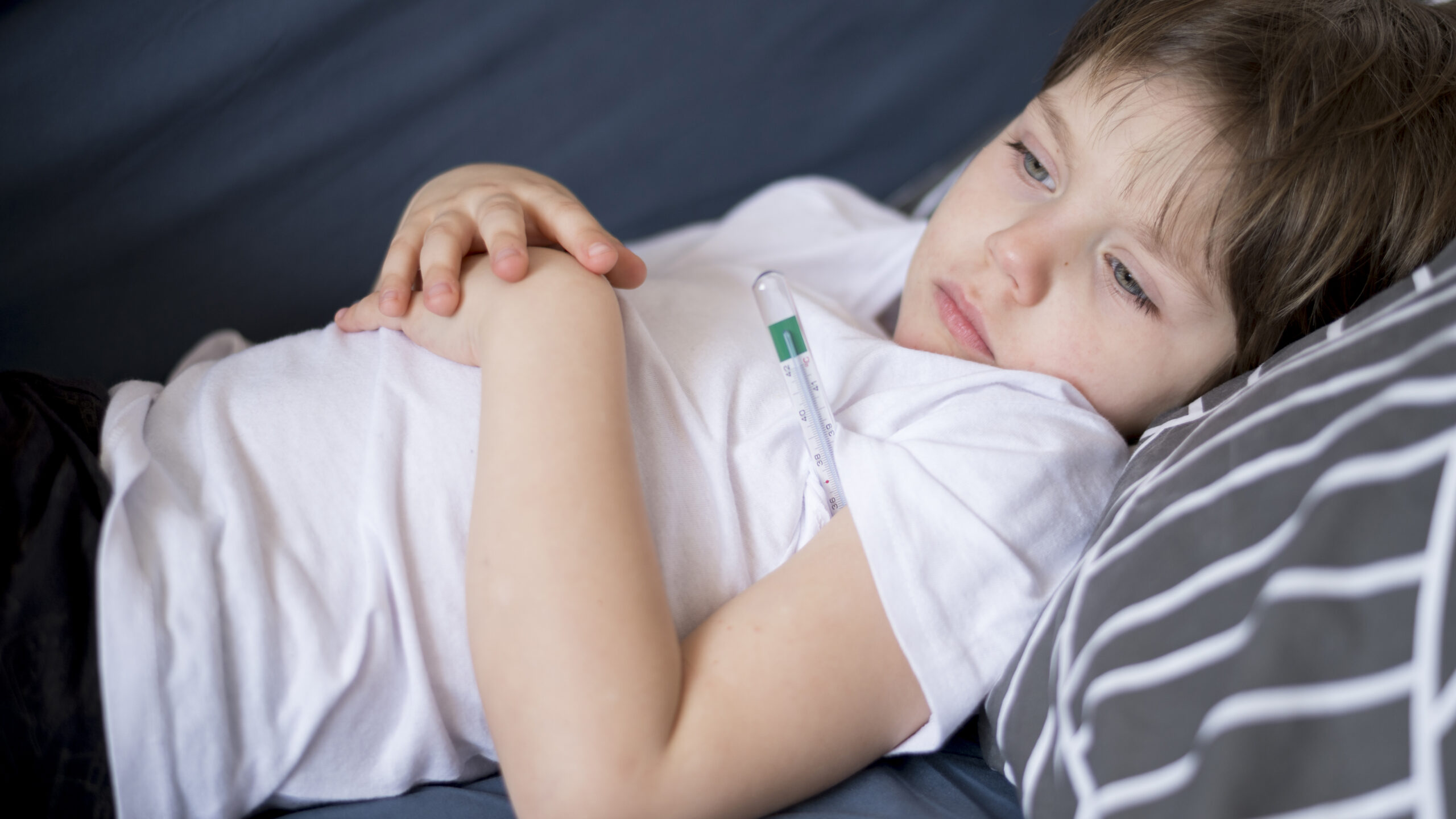
Definition of Fever
Definition: Fever is a body temperature above the normal range. Usually body temperature between 36º C and 37,2º C is considered normal.There are body temperature fluctuations during the day(in the morning is lower than in the evening).
The range of normal body temperature can be influenced by the following factors.
1.Age (children have higher body temperature than elderly people)
2.Sex (women have higher temperature than men)
3.Exercise (increases the body temperature)
4.Method of measuring body temperature (rectal temperature is the highest body temperature and the body temperature measured in the axillary-armpit is the lowest).
So according to the Centers of Disease Control and Prevention(CDC) of the United States of America fever is considered body temperature above 38º C
According to Mayo Clinic of USA fever is considered.
1.Above 38 ºC (rectal temperature and temporal temperature→forehead taken)
2.Above 37.8 ºC (oral temperature)
3.Above 37.2 ºC (axillary temperature)
Body temperature above 38º C indicates an infection or an inflammation.
How Fever Develops
How is fever created?
Fever is a part of the body’s own disease fight arsenal. When organism comes into contact with a pathogen endogenous pyrogenic cytokines are produced that through the blood go to hypothalamus (body thermostat) and they raise the hypothalamic set point of body temperature.As a result of this the body temperature is increased by the production of more body heat→ (increased metabolism and muscular tone and action-shivering) and by minimizing the heat loss (vasoconstriction-cold parts of the baby ).
This increase of body temperature,especially between 38 º C-39 º C is capable to kill many pathogen in different ways (directly or indirectly through the immune system).
Causes of Fever
What causes fever(rise in temperature)?
1.Bacterial infections (for example acute streptococcal tonsillitis)
2.Viral infection (for example influenza)
3.After vaccination
4.Autoimmune and autoinflammatory diseases (PFAPA,Hashimoto disease,Crohn’s disease,juvenile idiopathic arthritis)
5.Malignant diseases (leukemia,lymphoma,osteosarcoma)
Measuring Body Temperature
Ways of measuring body temperature:
1.Oral temperature (mouth)
2.Rectal temperature (rectum)
3.Tympanic temperature (ear)
4.Temporal temperature (forehead)
5.Axillary temperature (armpit)
The best and most reliable measurement of body temperature in infants under the age of 1 year is from rectum.Temporal,tympanic and axillary temperatures that are used in children over the age of 1 year are not so reliable. In case of shivering and vasoconstriction the body is cold so axillary and temporal temperature is not the right one.The tympanic temperature is not the right one in case the measurement is done in the ear with eardrum inflammation.
Parents must know that after shivering high temperature will follow.
Body temperature taken in the mouth it is not recommended in children under the age of 4 year.
Fever Management
Management of fever:
Antipyretic treatment is administered in order the child will feel good (for example if a child is running high temperature and he is in a good mood no antipyretic medicine is given→exception is when there is a history of febrile seizures)
1.During high body temperature take off child’s clothes and dress him very lightly.
2.Give him a lot of liquids because he looses a lot of liquids through sweating
3.Keep him in a well ventilated place with room temperature 20ºC.
4.Give antipyretics only if they are necessary .
Main antipyretics that are administered are paracetamol and ibuprofen.
The dosage of paracetamol is 10-15mg/kg of body weight every 4-6 hours up to 4 times daily.
A quick calculation of dosage is the following using the dosage of 12.5mg/kg.
Paracetamol(ml)=body weight of a child(kg) /divided by 2
For example paracetamol(ml)=12kg/2=6ml
This calculation is applied to
1.Calpol infant suspension(120mg/5ml)
2.Depon syrup(120mg/5ml)
3.Remedol syrup(120mg/5ml)
4.Arfen syrup(120mg/5ml)
In case of
1.Calpol six plus(250mg/5ml)
2.Remedol six plus(250mg/5ml)
The following calculation is applied
Paracetamol(ml)=bodyweight of a child/ divided by 4
For example paracetamol(ml)=30kg/4=7.5ml
There are also suppositories of paracetamol like Remedol suppositories 125mg,250mg,500mg,Algofen suppositories 125mg,250mg,500mg
For administration of a suppository consult your doctor.
The dosage of ibuprofen is 5-10mg/kg body weight every 8 hours.
A quick calculation of the dosage is the following based on the dosage of 6.6mg/kg of ibuprofen.
Ibuprofen(ml)=body weight of a child(kg)/divided by 3
This calculation is applied to the following antipyretics.Nurofen syrup 100mg/5ml and Algovil syrup 100mg/5ml
Nurofen or Algovil (ml)=12kg/3=4ml
In case of Nurofen 6-12syrup(200mg/5ml) the following calculation is applied.
For example Nurofen(6-12)syrup(5ml)=30kg/divided by 6 =5ml
Paracetamol and ibuprofen should not be administered to infants under the age of 3 months.
There are also Voltaren suppositories 12.5mg that are administered only under doctror’s advice.
Don’t give aspirin to children under the age of 17 year because it may cause Reyes syndrome that is might be fatal.
When to Seek Medical Help
When to call the doctor
1.Fever in an infant under the age of 3 months
2.High fever more than 40ºC that does not drop after antipyretics.
3.When fever drops and a child is still lethargic and inactive
4.If a child constantly cries and he is irritating.
5.If he has febrile convulsions.
6.If he had altered speech and consciousness (he does not respond normally to stimulation)
7.If he is vomiting and has diarrhea
8.If he has headache that does not abate after pain killers and he has neck stiffness.
9.If he has rash.
10.If he has breathing difficulties
11.If fever lasts more than 3 days.
Febrile Seizures
Febrile seizures
They are electric discharges in the brain that could cause jerking movements or it may look that your child has pass out.They related to a vulnerability of the developing nervous system to the effects of fever in combination with an underlying genetic susceptibility.
Febrile seizures occur in 2-4% of children younger than five years of age.
If this happens (febrile seizures) do not panic be calm and put your child in recovery position (on his side see photo or video) and check his breathing.Paracetamol suppositories might be administered.In case that seizures last more than five minute give rectal diazepam under the instructions of your doctor.The dosage is 0.5mg/kg body weight (rectal diazepam 5mg or 10mg)
During seizures a child is not in a danger if the proper measures are taken.
Febrile seizures do not affect the development of a child and do not result in epilepsy.
They subside on their own after the age of 5 years.
In case of febrile seizures call immediately your doctor.
References
References
el.m.wikipedia.org
www.mayoclinic.org Fever
www.nationwidechildrens.org Fever
-raising children.net.au Fever
www.uptodate Fever→Parents information
Kidshealth.org˃parents˃fever in kids
www.nhs.uk Febrile seizures
www.ninds.nih.gov Febrile seizures
Important note
This article provides general educational content. It does not replace a visit to the paediatrician or personalised medical advice.
Need help now?
For urgent symptoms, breathing difficulty, severe reaction, reduced consciousness, or rapid deterioration, seek emergency care immediately.