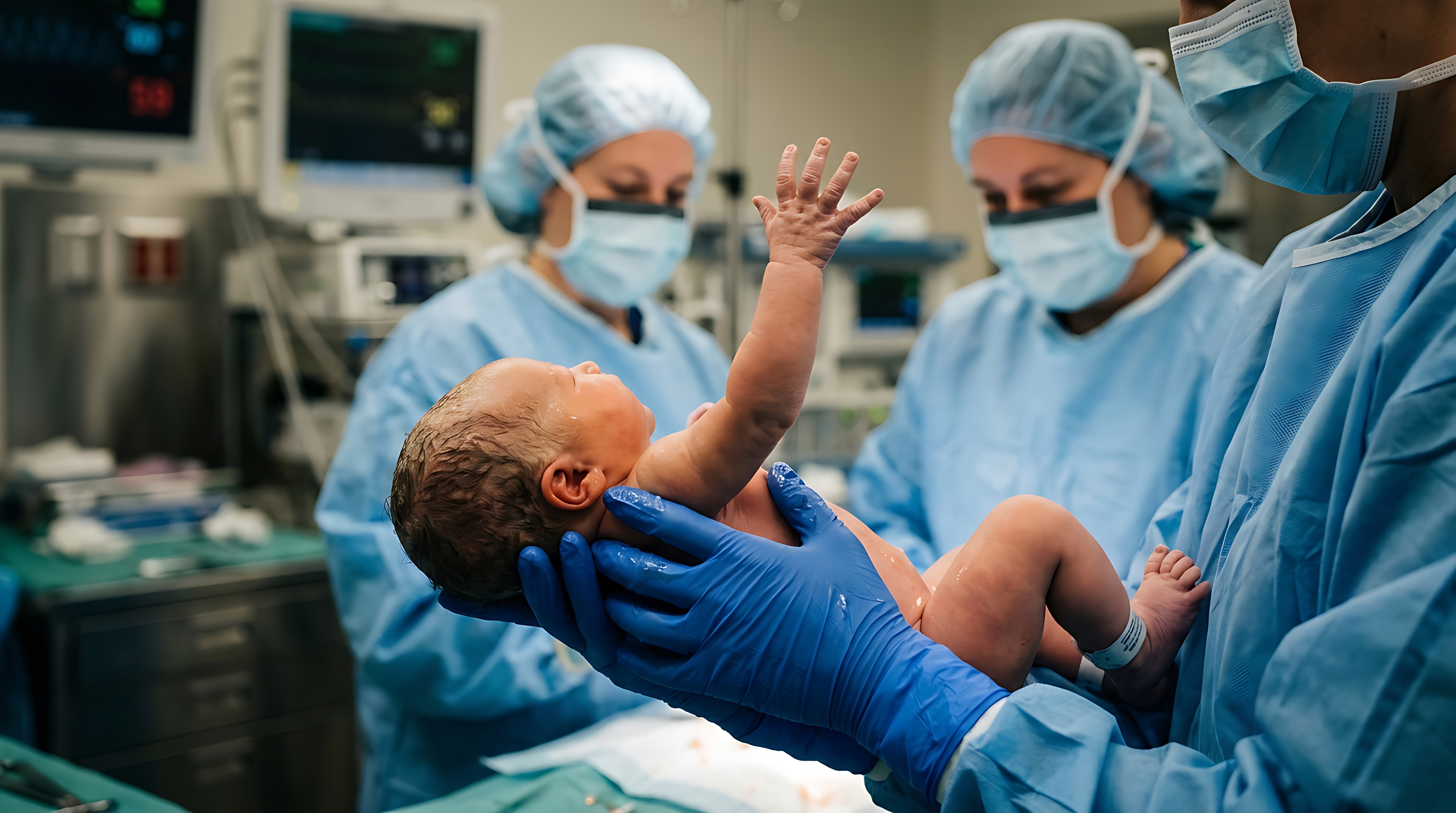
Surgical Emergencies
Most surgeries done in newborn and infants are due to medical emergencies or urgent condition. Frequently congenital defects that are at the top of the list for surgery in this group are usually gastrointenstinal anomalies. They are life threating conditions that has to operated as soon as possible.
Some of them are:
1.Esophageal atresia: It is a birth defect in which part of baby's esophagus (the tube that connects the mouth to the stomach) does not develop properly.Main symptoms are vomiting,drooling and chocking.
2.Tracheoesophageal fistula: It is abnormal connection between trachea(the tube that connects the throat to windpipe and lungs) and esophagus (the tube connecting the throat to the stomach) that causes 3Cs symptomatology that is coughing,chocking and cyanosis due to breathing difficulties.The symptoms mostly are due to milk aspiration.
3.Cleft-Lip-Palate: It is a spilit(cleft) in the lip(upper) or palate(roof of the mouth) seperately or together.Both result when facial structure are abnormally formed.This defect causes feeding problems.
4.Congenital diaphragmatic hernia: It is a congenital medical condition resulting from the developmental defect in the diaphragm(a muscle that seperates chest from abdomen) leading to protrusion of abdominal contents into thoracic cavity. This defect causes severe breathing difficulties.
Common Surgical Conditions
However, the simple surgery conditions are more frequent than the surgery conditions that are urgent.
1.Inguinal hernias(IH): Are one of the most common surgical problems in childhood. Inguinal hernias occur when a piece of intenstine or other organ in the abdomen slips through a hole in the abdominal wall.
Incarcerated hernia belongs to urgent surgical condition.
2.Umbilical hernias: They are very common and usually disappear with the first 3 years of life as the abdominal wall develops.If umbilical hernia does not resolve by age 5 or does complicate it will require surgical repair.
3.Hydroceles: Hydrocele is scrotal swelling due to the accumulation of fluids in the scrotum. It usually resolves itself. Only sometimes surgery is needed.
4.Undescended testes: If one or both testes have not dropped in the scrotum at birth. If testes don't descend by 6 motnhs it's very unlikely they will without treatment.Surgery is recommended at the age 6-12 months.
Additional Surgical Issues
5.Tongue ties: About 4% of babies are born with tongue tie.Frenulum is a tissue at the bottom of the tongue that attaches the tongue to the floor of the mouth. In the case of tongue tie it is short and thick thus restricting movement of the tongue. As long as the baby does not have any problem with feeding and later with speech it is not recommended release the tongue with surgery.
6.Pyloric stenosis:(Pyloromyotomy): Pyloric stenosis is the narrowing of the passage of stomach to duodenum causing vomiting. Pyloromyotomy is the procedure that corrects pyloric stenosis.
7.Circumcision: It is the surgical removal of foreskin of the penis,exposing the end of the penis. This is done either due to cultural or religious beliefs or due to medical reasons(fimosis or hygiene issues).
Key Notes
Key notes:
1.Life threatening surgical conditions are not so common in newborns and infants.
2.Early diagnosis is crucial for early surgical intevention.
3.Simple surgical conditions are more common and surgical intervention,if needed,is done later in infancy.
References
References
www.londonchildrensurgery.co.uk Five most common operations for babies
www.hopkinsmedicine..org Pyloronyotonus
maycase.com>blog> Common surgical condition in newborn and infants
www.suspeonsforlittlelives.org Surgery in children
www.cdc.gov Esophageal atresia
www.childrenshospital.org Tracheoesophageal fistula
www.mayoclinic.org> -Lip palate
www.ncbi.nlm.nih.gov Congenital diaphragmatic hernia
Important note
This article provides general educational content. It does not replace a visit to the paediatrician or personalised medical advice.
Need help now?
For urgent symptoms, breathing difficulty, severe reaction, reduced consciousness, or rapid deterioration, seek emergency care immediately.
