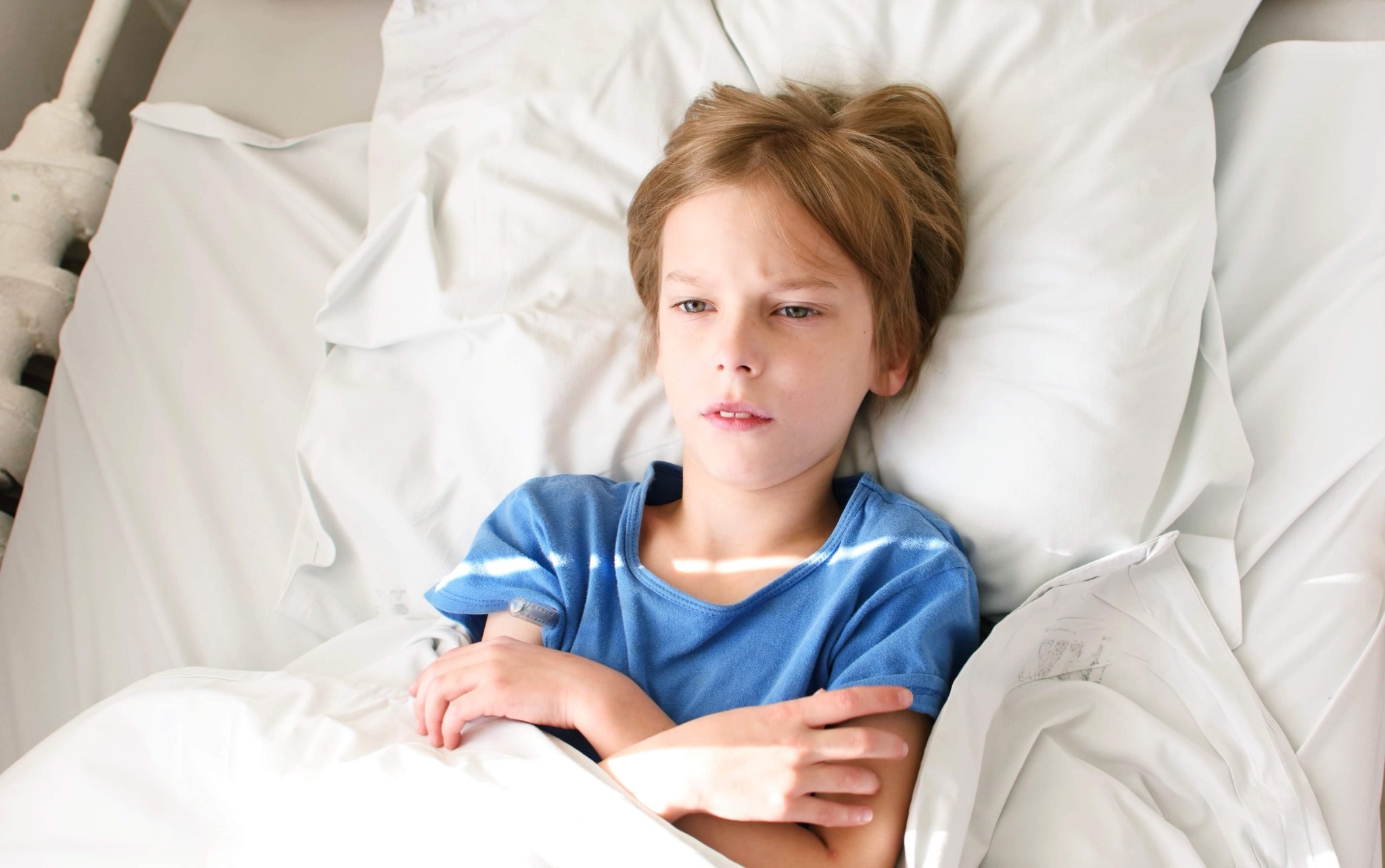
Urinary Tract Infections (UTI)
Urinary tract infections(UTI) in children
The urinary tract is made of two kidneys.They remove liquid waste from the blood in the form of urine and maintain a healthy balance of water,salts and minerals in the blood.Narrow tubes(ureters) carry urine from the kidneys to the bladder.From the bladder urine passes through urethra out of the body.
Urinary tract infection is inflammation of any part of the system(kidneys,ureters,urinary bladder or urethra).
There are two types of UTIs based on the location of the infection in child’s urinary tract.
1.Lower UTI: An infection in the bladder(cystitis). It usually affects older children.
2.Upper UTI: An infection in one or both kidneys(pyelonephritis).It usually affects newborns,infants toddlers and young children.
Urinary tract infection in children are common.By the age 6,studies estimate that approximately 2% of the boys and 8% of the girls have at least one UTI.
Causes and Risk Factors
What causes a UTI?
UTI can be caused by bacterias from the gastrointestinal tract that travel up through urethra to the bladder then through ureter to the kidney.Most common bacteria is Escherichia coli (E.coli) other bacterias are Proteus Klebsiella and Pseudomonas.
Which children are at risk for a UTI?
1.A UTI is much more common in girls(they have a shorter urethra and bacteria gets easier to the urinary bladder)
2.Uncircumcised boys are more at risk for a UTI than circumcised boys.
3.Bubble baths could irritate the urethra thus allow the bacteria to grow there. It is better to give a child shower.
4.Incorrect cleaning of the nappy area(never wipe back to front)
5.Constipation
6.Vesicoureteral reflex(the urine flows backwards form the bladder up the ureters to the kidneys)
7.Urinary obstruction(ureteropelvic junction obstruction a blockage in the area that connects the renal pelvis to one of the tubes (ureters) that move urine to the bladder)
Symptoms of UTIs
What are the symptoms of UTIs?
The clinical course of a UTI varies with patient’s age and the specific diagnosis(cystitis or pyelonephritis)
Children age 0-2 months
Neonates with UTI may display the following symptoms:
-jaundice(yellow color of skin and white parts of the eyes)
-fever
-failure to thrive
-poor feeding
-vomiting
-irritability
-pyelonephritis in this age may be discovered as a part of an evaluation for neonatal sepsis
Infants and toddlers age 2 months to 2 years
-poor feeding
-fever
-vomiting
-strong-smelling urine
-abdominal pain
-irritability
Children age˃2 years
-vomiting
-abdominal pain
-fever
-strong-smelling urine
-enuresis
-urinary symptoms(pain or burning that occurs when a child pees, increased frequency of urination)
In older children the clinical manifestation of cystitis(as above) prevails.
Diagnosis and Complications
How is UTI diagnosed?
1.Urine analysis(Urine specimen collection is very important in urine analysis
a) Midstream urine is a preferred method for children who can void on request b) Clean catch is appropriate for children who cannot void on request
c) Suprapabic aspirate or catheterization of urinary bladder in neonates and infants who are very unwell.
In case of the Midstream urine and clean catch specimen UTI is considered when there is one bacteria and colonies in culture greater than 100,000 colony forming units per ml(100,000CFU/ml) in case of suprapabic aspirate specimen colonies greater than 1000 CFU/ml and catherization of the bladder specimen colonies than 10,000 CFU/ml
2.Ultrasound examination of kidneys and urinary bladder in indicated cases.
3.Voiding cystourethrography-(ascending cystogram to exclude Vesicoureteral reflux:when urine goes backwards through the ureter to the kidneys.
4.DMSA scan(nuclear medicine scan) it’s anatomy and function to check for scaring of the kidney
Complications
Untreated or not properly treated urinary tract infections may lead to scaring of the kidneys that may affect the renal function.
Management and Prevention
Management
Management of UTIs depends on the age of the child and mainly on his clinical condition(if the child is unwell with very high fever,he or she is vomiting and is dehydrated,if he or she cannot take the antibiotic by mouth).
Antibiotics are administered according to the sensitivity of the bacteria to the various antibiotics(antiobiogram).The duration of the treatment depends on the location of the infection(pyelonephritis or cystitis).
Oral antibiotic treatment is a treatment of choice. But in severe ease intravenous antibiotic treatment is indicated.
How to prevent UTIs?
1.Give plenty fluids to your children especially water
2.Clean the nappy area from front to back(in infants and toddler)
3.Prefer to shower your child instead of bathing
4.Treat constipation
5.Prenatal diagnosis of urinary tract problems.
When to See a Doctor
When to see a doctor
1.If your child developing any of the symptoms of UTI
2.If your child is unwell with fever without other obvious causes.
Key points
1.Urinary tract infection in inflammation that can affect any part of the urinary tract.
2.Most infection are caused by bacterias from the gastrointenstinal tract.The most common is E.coli.
3. A UTI is much more common in girls.
4.Uncircumcised boys are more at risk for UTI than circumcised boys.
5. Symptoms vary by age and by the specific diagnosis(pyelonephritis or cystitis)
References
References
Medicine medscape.com pediatric Urinary tract infection
www.hopkinsmedicine.org Urinary tract infection in children
KidsHealth Urinary tract infection in kids
My.clevelandclinic.org Urinary tract infection in kids
www.rch.org.au Urinary tract infection
Σημαντική σημείωση
Αυτό το άρθρο παρέχει γενικό εκπαιδευτικό περιεχόμενο. Δεν αντικαθιστά την επίσκεψη στον παιδίατρο ή την εξατομικευμένη ιατρική συμβουλή.
Χρειάζεστε βοήθεια τώρα;
Για επείγοντα συμπτώματα, δυσκολία στην αναπνοή, σοβαρή αντίδραση, μειωμένο επίπεδο συνείδησης ή ραγδαία επιδείνωση, αναζητήστε αμέσως επείγουσα ιατρική φροντίδα.